
Interview: AWA Speaks on Osun Election, Calls for APC Unity in Oyo State and Genuine Reconciliation
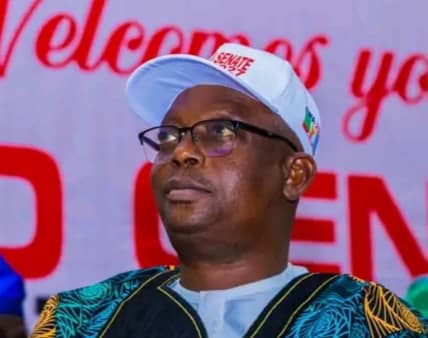
Dr. Ademola Wasiu Alli (AWA), a chieftain of the All Progressives Congress (APC) in Oyo State and a former aspirant for the Oyo Central Senatorial District, has spoken extensively on the lessons from the party’s recent electoral experience in Osun State, the state of internal cohesion within the APC, the need for credible internal democracy, and the importance of reconciliation ahead of future elections.
In this interview, AWA, who served as a member of the APC National Campaign Committee for the Osun State Governorship Election, reflects on the factors that shaped the party’s performance, drawing attention to the importance of teamwork, grassroots mobilisation, effective communication, and coordination between national and state structures. He also speaks candidly about the outcome of the Oyo Central senatorial primary, his decision to remain committed to the APC despite his grievances, his efforts towards reconciliation among party stakeholders, his vision for human capital development, and the reforms he believes are necessary to strengthen the party’s internal democracy and electoral prospects.
The Interview
Interviewer: For the purpose of this interview, please briefly introduce yourself.
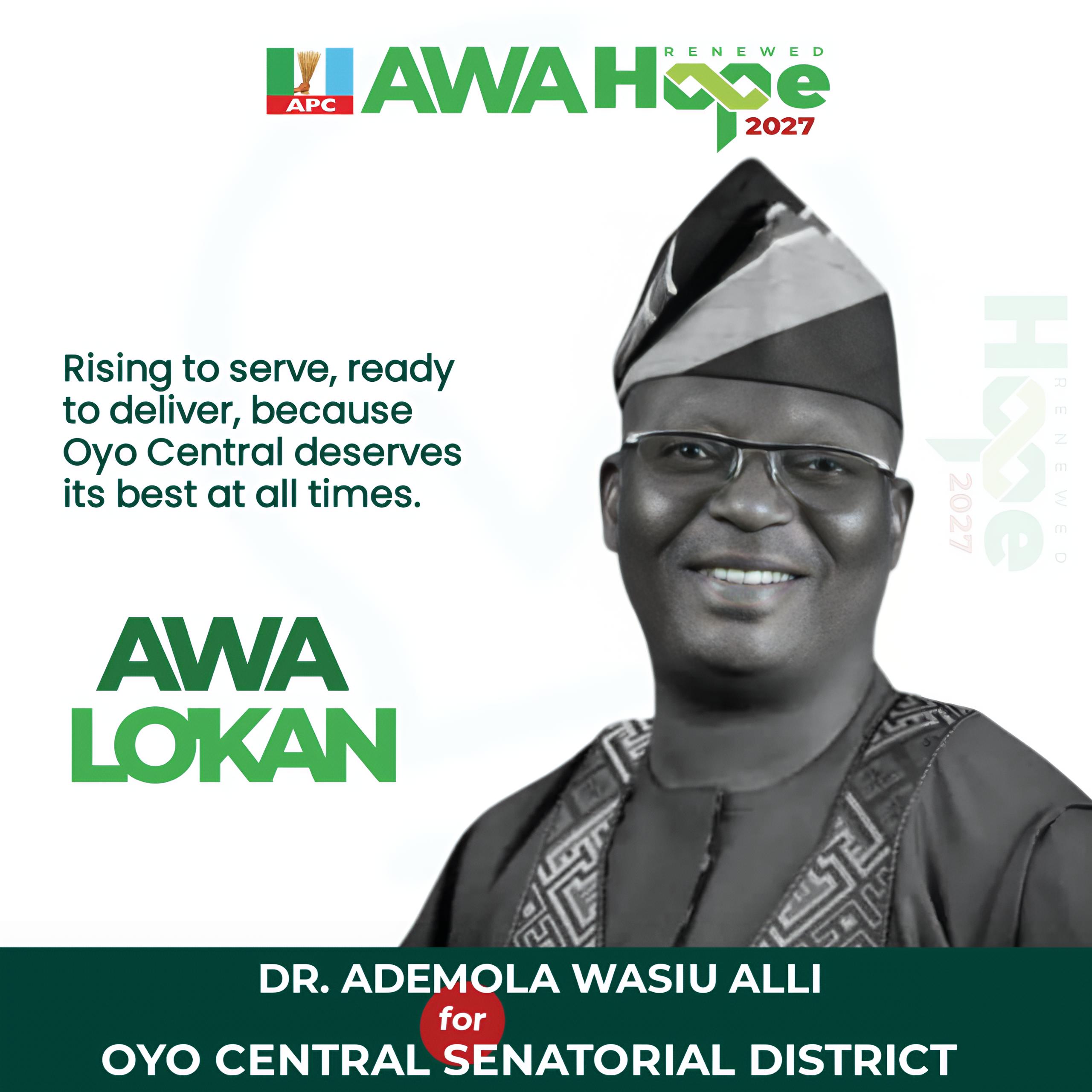
Dr. Ademola Wasiu Alli (AWA): My name is Ademola Wasiu Alli, popularly known as AWA. I am a member of the All Progressives Congress (APC) and was one of the aspirants for the Oyo Central Senatorial District in the last APC primary. I am a chartered accountant, businessman, farmer, and I hold a PhD in Leadership.
Interviewer: You served as a member of the APC National Campaign Committee for the Osun State Governorship Election. What was the single biggest strategic lesson you took away from that election?
AWA: The biggest strategic lesson is teamwork. There are many lessons, but if I must pick one, it is teamwork. A cohesive party won the election. From outside, it was obvious that the opposition was united while the APC was not. Unity is critical to electoral success.
Interviewer: Looking back, what internal party dynamics, cooperation or friction most shaped the outcome?
AWA: Preparation, or the lack of it, affected the APC. Before we arrived, it seemed the APC had accepted defeat, but about two weeks before the election, the party pulled together and began working. The opposition, which was the party in government, had always been prepared.
They also had the civil service and civil servants as a key support base. Money and the ability to mobilise also played a role. In short, the APC’s late mobilisation and internal divisions affected our performance.
Interviewer: In your honest assessment, where did the party’s messaging or ground game fall short?
AWA: Internal cohesion was the major problem. The party was not united. There were internal crises and disputes, while groups within the APC disagreed over whether to welcome certain people.
Issues around internal democracy and perceptions of being cheated also created resentment. In our context, opinion leaders can influence many votes, and civil servants are influential in their communities. When such stakeholders are not aligned, it undermines the party’s prospects.
Interviewer: How did coordination between the national campaign committee and the state structure work in practice?
AWA: There was a disconnect between the national committee and the state structure. The national body can only support and advise, while the local organising committee must implement the strategy.
The local team did well, but it started late, which limited its effectiveness. The national committee can provide strategic support, but successful implementation ultimately depends on the local structure.
Interviewer: You have built a reputation for party mobilisation and engagement in Oyo Central. What is next for you politically?
AWA: I am in politics to serve. I spent over 30 years in the civil service and rose to the director level. I know how government works and want to help break down barriers that prevent effective policy implementation.
I believe in the policies of President Bola Ahmed Tinubu and his vision for progress. I want to be part of a team that moves Nigeria forward. Despite the challenges in Oyo State, we are working to strengthen the party and support the President.
Interviewer: How would you describe your relationship with party leadership in Oyo Central and Oyo State?
AWA: The reality is that relationships are strained. The last primary generated distrust and a loss of confidence in the leadership. But because of our love for the party, we are calling people back and trying to solve the problems.
I have been speaking with leaders on both sides of the divide to encourage reconciliation. Problems are solvable. We just have to face them rather than abandon the party.
Interviewer: Some ambitious politicians who do not get their preferred ticket often leave the party. How do you see your continued role in the APC?
AWA: People have a right to feel bad when they believe they have been cheated. I have been to the party’s appeal committee, and many people are unhappy. Some are considering other parties. But I remain with the APC because I believe in its philosophy and the direction the national leadership is taking.
I advocate negotiation and reconciliation, with give and take. I am committed to remaining in the party and working to resolve its internal issues.
Interviewer: Regardless of holding elective office, what issues in Oyo Central are you committed to championing?
AWA: Human capital development is my major focus. This includes agriculture, digital technology, entrepreneurship and all areas that build people’s capabilities.
Countries without natural resources have prospered by investing in their people. Nigeria can do the same by generating revenue through human capital and spending wisely. We need to increase our GDP and focus on skills, opportunities and the development of our people.
Interviewer: Are there other elective or party positions that interest you, and what would it take for you to consider running?
AWA: I am willing to serve in any capacity the party deems suitable. Service is not about selfish interest; it is about advancing the country and the party.
My decision to run would depend on where the party wants me to serve. I have experience and a foundation in community work, and that continues to motivate me.
Interviewer: For the 2027 strategy, what should the APC change nationally and in Oyo State?
AWA: The APC is doing well nationally, but the party’s structure concentrates too many decisions at the national level. Candidate selection should be driven by local popularity and local knowledge.
We need to strengthen internal party democracy so that local members can choose their representatives. The National Executive Committee should insist on credible primaries and peer review among parties to promote accountability.
Many parties collect interest forms and funds but later impose candidates. That is wrong and creates the perception of fraud. Parties must ensure credible and transparent primaries.
Interviewer: What role should the national campaign committee model play in states such as Osun?
AWA: The national committee’s role should be advisory and complementary. Its advice should be based on good local data and research provided by the state and local party structures.
Implementation must remain local. National teams can provide strategy and support, but they cannot substitute for accurate local information and local execution.
Interviewer: How should the party handle candidate selection and primaries going forward, given disputes that have weakened it in some states?
AWA: We must practise true internal democracy. The culture of top-down imposition stems partly from Nigeria’s history with military rule.
Democracy must start at the party level, with the will of the majority of members in each constituency. If parties insist on credible primaries and allow local members to select their representatives, imposed candidates will be less likely to fail at the polls.
Interviewer: What is your assessment of APC’s standing in the Southwest heading into 2027, and how should the party rebuild trust with disillusioned voters?
AWA: The APC is strong in parts of the Southwest. Lagos and Ekiti are standing well. With the performance of President Bola Ahmed Tinubu, the Southwest can remain favourable to the APC, but there is a need for wider sensitisation and public education.
Many people do not understand the details of government policies because social media often shapes perceptions. We must educate people on programmes such as student loans and agricultural initiatives and show their real impact.
The President’s actions to strengthen state finances and decentralise some functions should also be communicated clearly so that voters can understand the benefits. With better information and outreach, the APC can consolidate its standing in the Southwest.
Interviewer: On party unity and reconciliation, how do aspirants who did not get the ticket typically get reintegrated into campaigns? Would you be part of that process in your constituency?
AWA: I will be part of the reconciliation process across the state. We must carry everyone along and be transparent with information.
We cannot abandon those who feel cheated. Instead, we should find meeting points and bring people together. United efforts often win elections, while exclusion weakens us.
I do not believe in perpetuating divisions. We should solve our problems and move forward together.
Interviewer: How do you think giving power to people who have marginalised others will bring progress to Oyo State?
AWA: We need to settle our problems, take charge of leadership in Oyo State, and follow the President’s agenda to make Oyo State great again. Reconciliation and responsible leadership will help restore good governance.
Interviewer: What message do you have for supporters who feel your exit from the race was unjust?
AWA: They have a right to feel bad. I feel very bad too. But you cannot throw away the baby with the bathwater.
Those who have an undue advantage should bring everyone together and give others a sense of belonging. If they are willing to work, I and others are willing to participate.
We must reconcile and move forward for the good of the party.
Interviewer: What would genuine reconciliation with the Oyo Central APC structure look like to you?
AWA: Genuine reconciliation, as I said earlier, is not about me being the only person who people believe won the election. Irrespective of that, we are still one, and everybody who contested should be carried along.
The House of Representatives aspirants should also be carried along. There were not many of them, perhaps three or four. Whatever the party has decided, we need to work together.
I am looking forward to seeing all of us together. This interview can also serve as a springboard for calling on all the other aspirants. We need to come together, and we should not leave our party to anybody. We should take charge of our party.
Let us come together and discuss how we can make the best out of the situation we find ourselves in. It is not their party; it is our party. We should all come together and see how we can make the best of the situation.
Interviewer: On recommendations for the party, what specific reform would you push for at the national and state levels?
AWA: It is simply that we need to practise internal democracy. It is not easy because, as I always tell people, democracy is not the rule of the best; it is the rule of the majority.
Sometimes, you tend to become autocratic when you believe you can see the right path while the majority wants to go another way. You may want to say, “No, all of you should follow me,” but that is not democracy.
You have to convince them and make them see what you see. If you have a vision and you are a good leader, people will follow you and your vision without questioning how you arrived at it because you have been tested and proven.
So, I want us to practise democracy at both the national and state levels. At the national level, however, there is too much interference. The constitution gives them the power because the National Secretary is the one who must submit the name of the candidate. Whichever name he submits becomes the party’s choice.
So, even when everyone is crying, he may not even know that people are crying. We need to change that attitude.
Interviewer: It is natural for setbacks like this to carry personal weight beyond politics. How has this affected you, and what has it taught you about resilience in political life?
AWA: I have been a Democrat all my life, and I understand that life is about give and take. You may not always have things the way you want them, so I am not really too bothered.
I am also a fighter. I fight for my rights and for human rights. When you are wrong, I will tell you. Even if you have all the money and influence behind you, I can still tell you.
In fact, that is what makes me the darling of many people in Oyo Central. They see the people they consider their oppressors as very powerful, and they find someone who can face those people. They ask, “How much does he have in his pocket?” That is the way it is.
Naturally, you put a lot into something, and you become disappointed when the outcome is not what you expected. It does not mean you did not put in a lot of effort. But when you feel cheated, that is when the weight becomes heavier.
If you are defeated fairly, you will say it is a game. It should not be a matter of life and death. You believe in your idea, you want to mobilise people, but then someone with power somewhere changes the whole thing. It is very demoralising.
But I have been talking to my people and telling them, “Look, calm down. It is not the end of the world.”
The most important thing is for our party to do the right thing in the country and for the country to move forward.